April 14, 2025
Zero Leakage, Total Control: Understanding Magnetic Coupling Technology in Precision Stirring
Learn how magnetic coupling stirrer technology eliminates shaft seal failures and provides absolute containment for hazardous, sterile, and high-pressure applications. Discover the engineering principles, material considerations, and operating envelope that make seal-less stirring the gold standard.
## Why Seals Fail — And Why That Matters More Than You Think
Let's talk about the shaft seal.
It's the part of a stirred reactor that nobody thinks about until it fails. And when it fails, the consequences aren't subtle. A hydrogenation run vents flammable gas into the lab. A pharmaceutical intermediate gets contaminated by seal lubricant. A vacuum process loses integrity, and the whole batch goes to waste.
The reality is that conventional sealing technologies — packing seals and mechanical face seals — all share the same fundamental limitation: they rely on physical contact between rotating and stationary parts. Packing seals wear down. Mechanical seals require precise alignment and regular maintenance. Over time, both leak. That's not a design flaw. It's physics.
This is where **magnetic coupling stirrer** technology changes the game entirely. Instead of trying to seal a rotating shaft that penetrates the vessel wall, magnetic drives eliminate the penetration altogether. The stirring action happens inside a completely sealed chamber. The motor drives the impeller through the vessel wall — without touching it. A **seal-less stirrer** based on this principle can achieve what mechanical seals simply cannot: absolute containment of the process fluid, regardless of operating pressure or temperature.
The market has clearly recognized this advantage. According to Future Market Report, the global **magnetic stirrer reactor** market was valued at **USD 780.50 million in 2024** and is projected to reach **USD 1,245.30 million by 2032**, growing at a CAGR of **6.1%**. The pharmaceutical synthesis segment alone accounts for approximately **42%** of market share, driven by the demand for contamination-free mixing in drug development and fine chemical production.
> That growth isn't happening because magnetic drives are cheaper upfront — they're not. It's happening because the cost of a leak — in safety, product quality, or regulatory compliance — far outweighs the equipment premium.
A **zero leakage agitator** is an investment in process integrity that pays for itself the first time it prevents a batch loss or a safety incident.
---
## How Magnetic Coupling Actually Works
The principle behind a **magnetic coupling** is surprisingly elegant — and surprisingly old. Physicists have understood magnetic force transmission for centuries. What makes modern **magnetic stirrer reactor** technology so effective is the combination of rare-earth permanent magnets with precision-engineered containment shells.
Here's what happens in a typical **magnetically coupled stirrer**:
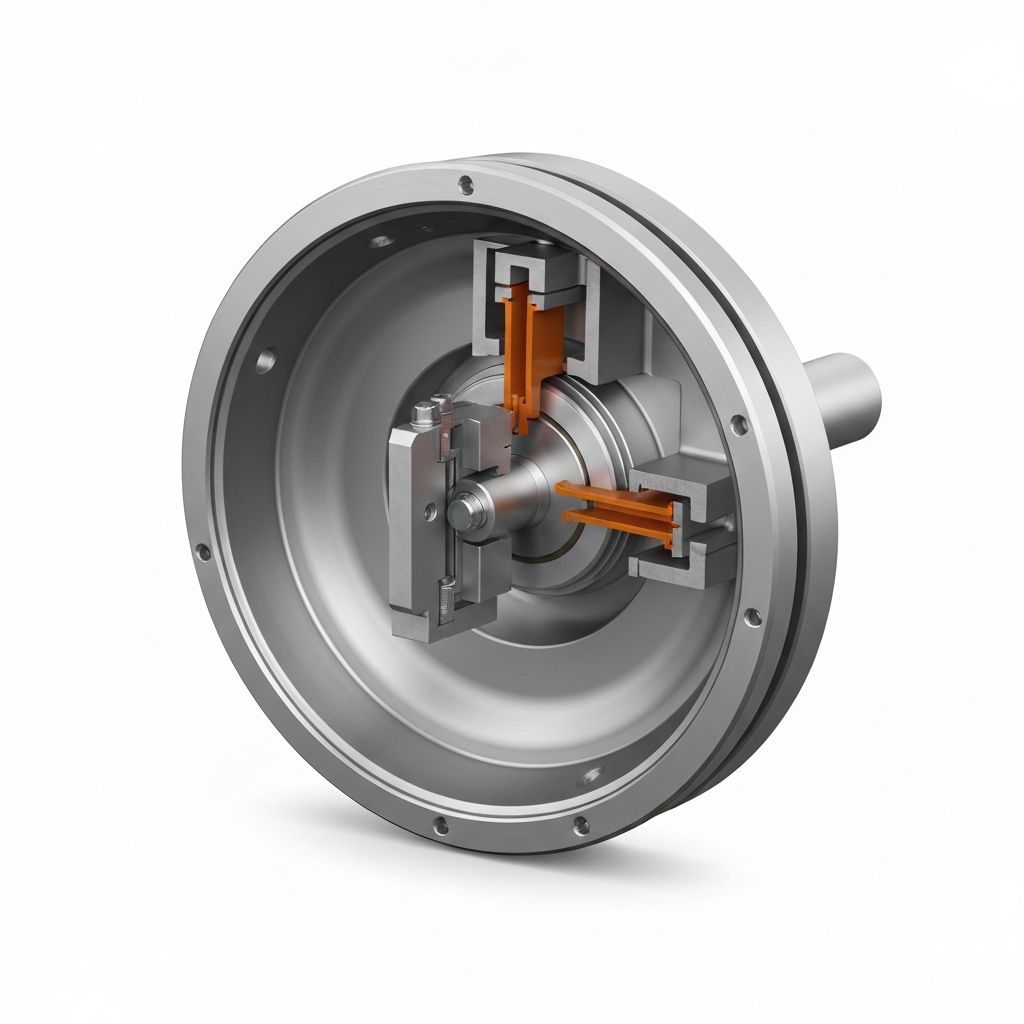
An external drive magnet assembly — mounted on the motor shaft — rotates outside the sealed reactor vessel. Inside the vessel, a corresponding internal magnet assembly is attached to the stirring impeller shaft. Between them sits a hermetically sealed containment shell, also called an isolation shell or can.
When the motor turns the external magnets, their moving magnetic field passes through the containment shell and couples with the internal magnets. The internal shaft rotates in perfect synchronization with the external drive — without any physical connection. This contactless torque transmission is what makes **seal-less stirrer** designs possible.
The coupling can be configured in different ways:
- **Radial couplings** place magnets around the circumference of the drive and driven shafts
- **Axial couplings** face magnets toward each other across a flat barrier
Each configuration offers different torque density and alignment tolerance characteristics. High-performance systems often use **samarium-cobalt (SmCo)** or **neodymium-iron-boron (NdFeB)** rare-earth magnets to achieve maximum torque transmission in minimal space.
The containment shell itself is a critical component. It must be non-magnetic to avoid interfering with the magnetic field — hence the use of stainless steel, Hastelloy, or ceramic materials — and it must withstand the full pressure differential between the process interior and the external environment. Shell thickness is carefully balanced: thicker walls provide higher pressure ratings but weaken the magnetic coupling; thinner walls improve coupling efficiency but limit pressure capability.
An important safety feature worth noting: if a **magnetic stirring reactor** is overloaded — say, by settled solids that exceed the coupling's torque limit — the magnets simply "slip" or decouple. The impeller stops while the motor continues running. This prevents mechanical damage to the drivetrain. Once the overload condition is cleared, normal operation resumes without component replacement. This inherent overload protection is something mechanical seals simply cannot provide.
---
## The Zero-Leakage Proposition — Not Just Marketing
The phrase "zero leakage" gets used a lot in equipment catalogs. With **magnetic coupling stirrer** technology, it's actually true — and the reason lies in the fundamental difference between static and dynamic sealing.
A **magnetic agitator reactor** eliminates the dynamic seal entirely. Instead of trying to seal a rotating shaft — a moving part — the containment shell forms a static seal with the reactor body. Static seals, typically O-rings or gaskets clamped between stationary surfaces, are inherently far more reliable than dynamic seals. They don't wear from rotation. They don't generate frictional heat. They don't require constant adjustment.
The result is a **hermetic magnetic drive** that provides absolute containment — "zero process leakage" as described in technical literature — making magnetic drives essential for toxic materials, sterile processes, and high-purity applications where seal contamination or emissions are unacceptable. This is achieved by the application of a hermetically sealed isolation shell, thereby resulting in a "ZERO LEAKAGE" system.
This static-seal approach also enables operation across an extraordinarily wide pressure range. Magnetic drives can be configured for full vacuum operation — down to **1×10⁻⁴ mmHg** — all the way up to **350 bar or more** for metal reactors. Some specialized systems are rated to **6000+ psig** with proper containment shell design. Glass reactors, limited by the vessel material itself, typically operate up to 6 bar with magnetic drives.
The practical implications are significant:
- For reactions involving hydrogen, carbon monoxide, ammonia, or other hazardous gases, the elimination of a shaft penetration removes the single most likely leak path
- For pharmaceutical synthesis where sterility is critical, magnetic stirring eliminates the contamination risk associated with seal lubricants and wear particles
- For high-vacuum distillation, magnetic drives maintain system integrity where mechanical seals would fail
---
## Material Matters — What Goes Into a Leak-Proof Drive
The performance of a **magnetic drive agitator** depends heavily on material selection — both for the containment shell and for the wetted components that contact the process fluid.
### Containment Shell Materials
The isolation shell must balance three competing demands: magnetic transparency, pressure resistance, and chemical compatibility. Common options include:
- **316 stainless steel** for general-purpose applications
- **Hastelloy C-276** for aggressive acidic environments
- **Titanium or zirconium** for chloride-containing processes
- **Ceramic materials** for applications where metallic shells would interfere with coupling efficiency
### Wetted Component Materials
The internal stirring assembly — shaft, impeller, bearings — is fully immersed in the process fluid. Material selection here follows the same principles as any other reactor component:
- **316 stainless steel** handles most neutral and mildly corrosive environments
- **Hastelloy, Inconel, and titanium** address more demanding chemistries
One of the unique advantages of **magnetic stirring reactor** designs is that they can accommodate **PTFE-coated stirring elements** for maximum chemical inertness. PTFE (polytetrafluoroethylene) resists virtually all chemicals — it can withstand boiling aqua regia without degradation — and the only exceptions are molten alkali metals, chlorine trifluoride, chlorine pentafluoride, and liquid fluorine. When combined with magnetic drive technology, PTFE-coated impellers and stir bars create a truly contamination-free mixing environment that handles corrosive chemistries with minimal sample interaction. The chemically inert construction also offers high-temperature compatibility, with PTFE components typically rated from **-200°C to +250°C**.
### Bearing Systems
Because the internal shaft is completely enclosed, any bearings that support it must operate without external lubrication. Process-compatible bearing materials — PTFE, PEEK, ceramic, or specialized alloys — are selected based on the process chemistry and operating temperature. This is a critical design consideration: the bearing system is the one wear component in an otherwise maintenance-free drive.
---
## Pressure, Temperature, and Torque — The Operating Envelope
Understanding the performance limits of magnetic coupling systems is essential for proper specification.
### Pressure Capability
Magnetic drives span an enormous pressure range:
- Laboratory-scale systems can operate from full vacuum to **300 bar** in a single configuration
- Industrial-scale magnetic couplings reach **200 bar or more**
- High-end specialized systems are rated to **1000 bar (14,500 psi)**
The practical limit is determined by containment shell thickness and material strength — not by the magnetic coupling principle itself.
### Temperature Range
With appropriate cooling jacket design, magnetic drives handle temperatures from **-50°C to +500°C**. Standard industrial configurations typically cover **-40°C to +350°C**. At elevated temperatures, two factors come into play:
- The magnetic materials themselves must retain their magnetic properties without demagnetization
- Bearing materials must maintain structural integrity and lubrication properties
High-temperature applications often specify **samarium-cobalt magnets** for their superior thermal stability.
### Torque Capacity
Torque transmission is where magnetic drives show their primary limitation:
- Laboratory-scale drives typically deliver **4 to 400 N·m** of torque
- Industrial-scale systems reach **400 to 7000 N·m**
For low-viscosity fluids and standard mixing applications, this is more than adequate. For extremely viscous materials, dense slurries, or applications requiring high startup torque, magnetic drives may reach their limits.
### Speed Range
Magnetic stirrer drives can achieve precisely controlled speeds from **0-2000 rpm for DC models** and up to **3000 rpm for AC configurations**. Standard industrial drives typically operate in the **0-500 to 0-750 rpm** range. The upper limit is governed by bearing design and the cooling requirements of the magnetic coupling itself.
---
## Magnetic Stirring vs. Mechanical Seals — A Side-by-Side Look
The choice between a **leak-proof agitator** and a mechanical seal isn't about which technology is "better" — it's about matching the technology to the application. The table below summarizes the key differences based on industry specifications:
| Characteristic | Magnetic Coupling | Mechanical Seal |
|---------------|-------------------|-----------------|
| Leak Prevention | 100% leak-free (static seal) | Potential leak over time |
| Maintenance | Minimal; long service life | Requires periodic seal replacement |
| Torque Capacity | Moderate | High (suitable for viscous materials) |
| Initial Cost | Higher upfront investment | Lower upfront cost |
| Suitability | Hazardous/corrosive reactions, lab R&D, sterile processes | Large-scale industrial, high-viscosity mixing |
| Long-Term Reliability | High | Medium (depends on maintenance) |
The table highlights the essential trade-off: **magnetic coupling stirrer** technology trades higher initial cost for absolute leak prevention and minimal maintenance. Mechanical seals trade lower upfront investment for higher ongoing maintenance and inherent leak risk.
> For a research laboratory running small-scale hydrogenations with precious catalysts, the cost of a single lost batch — or worse, a safety incident — far exceeds the premium for a **seal-less stirrer**. For a large chemical plant mixing viscous polymers where torque demand is high and the process fluid is non-hazardous, a well-maintained mechanical seal may be the more practical choice.
---
## Where Magnetic Stirring Belongs — And Where It Doesn't
### Clear Winners for Magnetic Stirring
- **Hydrogenation and other gas-liquid reactions involving flammable gases** — zero leakage is a safety imperative, not a preference
- **Pharmaceutical synthesis and sterile processing** — magnetic stirring eliminates contamination from seal lubricants and wear debris
- **High-vacuum distillation** — magnetic drives maintain integrity where mechanical seals leak
- **Corrosive chemistry** — with proper material selection (Hastelloy, titanium, or PTFE-coated components), magnetic drives handle aggressive media that would attack seal materials
- **Supercritical fluid processing** — pressures exceeding 200 bar with simultaneous high temperature push mechanical seals beyond their limits
### Where Magnetic Stirring Reaches Its Limits
- **Extremely viscous materials or dense slurries** — if torque requirements exceed what magnetic coupling can deliver, mechanical agitation with direct shaft drive may be necessary
- **Very large industrial vessels** — magnetic drives scale up, but the cost premium increases with vessel size
- **Applications where frequent access to the internal stirring assembly is required** — magnetic drives are not designed for quick disassembly
- **Budget-constrained applications with non-hazardous chemistry** — if a mechanical seal leak poses minimal safety or contamination risk, the lower upfront cost may be justified
---
## What to Look for in a Laboratory Equipment Manufacturer
When sourcing a **magnetic stirrer reactor**, the **laboratory equipment manufacturer** you choose determines whether the system performs as specified.
### Pressure Vessel Certifications
Look for ASME Section VIII compliance for pressure vessels, PED certification for European installations, or equivalent national standards. Reputable manufacturers hold ASME "U" and "U2" stamps for pressure vessel construction.
### Material Traceability
Quality manufacturers provide complete material certifications with traceability from mill to finished product. For specialty alloys like Hastelloy or titanium, this documentation is essential.
### Customization Capability
Standard catalog reactors rarely fit every application perfectly. The manufacturer should be able to customize port configurations, impeller designs, and material selections based on your specific chemistry.
### Testing Documentation
Hydrostatic test reports, helium leak test certificates, and performance verification data should be standard deliverables.
### After-Sale Support
Magnetic drives are reliable, but when service is needed — bearing replacement, magnet inspection — the manufacturer should provide parts, documentation, and technical support.
The right manufacturer becomes a partner in your process development, not just a supplier who ships equipment and disappears.
---
## The Bottom Line
**Magnetic coupling stirrer** technology solves a fundamental problem in stirred reactor design: how to transmit mechanical power into a sealed vessel without creating a leak path. The answer — contactless torque transmission through a hermetically sealed containment shell — is elegant in concept and proven in practice.
For applications where leak prevention is non-negotiable — hydrogenation, toxic chemistry, sterile processing, high-purity synthesis — a **leak-proof agitator** based on magnetic drive technology is not a luxury. It's the only option that provides absolute containment.
The market reflects this reality. With the global **magnetic stirrer reactor** market growing steadily toward **USD 1.25 billion by 2032**, and with pharmaceutical synthesis representing nearly half of that demand, the trend is clear. Researchers and process engineers are prioritizing safety, purity, and reliability — exactly what magnetic drive systems deliver.
When evaluating laboratory stirring technology for your next reactor system, the question isn't whether magnetic coupling is an option. It's whether your process can afford not to have it.