April 28, 2025
Inside the Pressure Vessel: What Actually Matters When Specifying a Lab-Scale High-Pressure Reactor
A comprehensive guide to selecting the right high-pressure reactor for your laboratory. From material selection to safety features, learn the five critical dimensions that drive smart reactor specification — and avoid costly mistakes.
## The Market Is Growing — But So Is the Confusion
Here's a conversation that happens more often than it should.
A researcher gets a grant to explore new catalytic materials. They know they need a **high temperature high pressure reactor**. They browse some catalogs, see a wide range of stainless steel vessels ranging from USD 3,000 to USD 30,000 for what looks like roughly the same thing, and start asking questions that the spec sheet doesn't really answer.
Meanwhile, the global market for this equipment keeps expanding. **High pressure reactor** market size was estimated at roughly **USD 1.35 billion in 2024** and is projected to reach about **USD 2.39 billion by 2032**, growing at a CAGR of **7.25%**. Within that broader category, the **hydrothermal synthesis reactor** segment — the specialized vessels used for nanoparticle and advanced material synthesis — stood at approximately **USD 83.27 million in 2024** and is expected to hit **USD 126.83 million by 2033**, growing at **5.40% CAGR**.
Zoom into China specifically, and the numbers tell a similar story of rapid expansion. The domestic laboratory high-pressure reactor market reached approximately **RMB 1.87 billion in 2024**, with annual growth exceeding **9%**. The broader high-pressure reactor segment in China surpassed **RMB 8.5 billion in 2025**, with nickel-alloy equipment alone growing at **12.3% CAGR** — a clear signal that more demanding applications are driving higher-performance material requirements.
That growth makes sense. Research in nanomaterials, hydrogen storage, pharmaceutical intermediates, and advanced polymers all relies on reactions that simply won't happen at ambient pressure. But more demand also means more options — and more chances to pick the wrong piece of equipment for what you're actually trying to do.
> This guide walks through what actually matters when specifying **high pressure reactor selection**. Not just the headline specs, but the interlocking decisions that determine whether a reactor becomes a reliable workhorse or an expensive source of frustration.
---
## First Things First: What Kind of Reactor Are We Even Talking About?
Before diving into parameters, let's define terms.
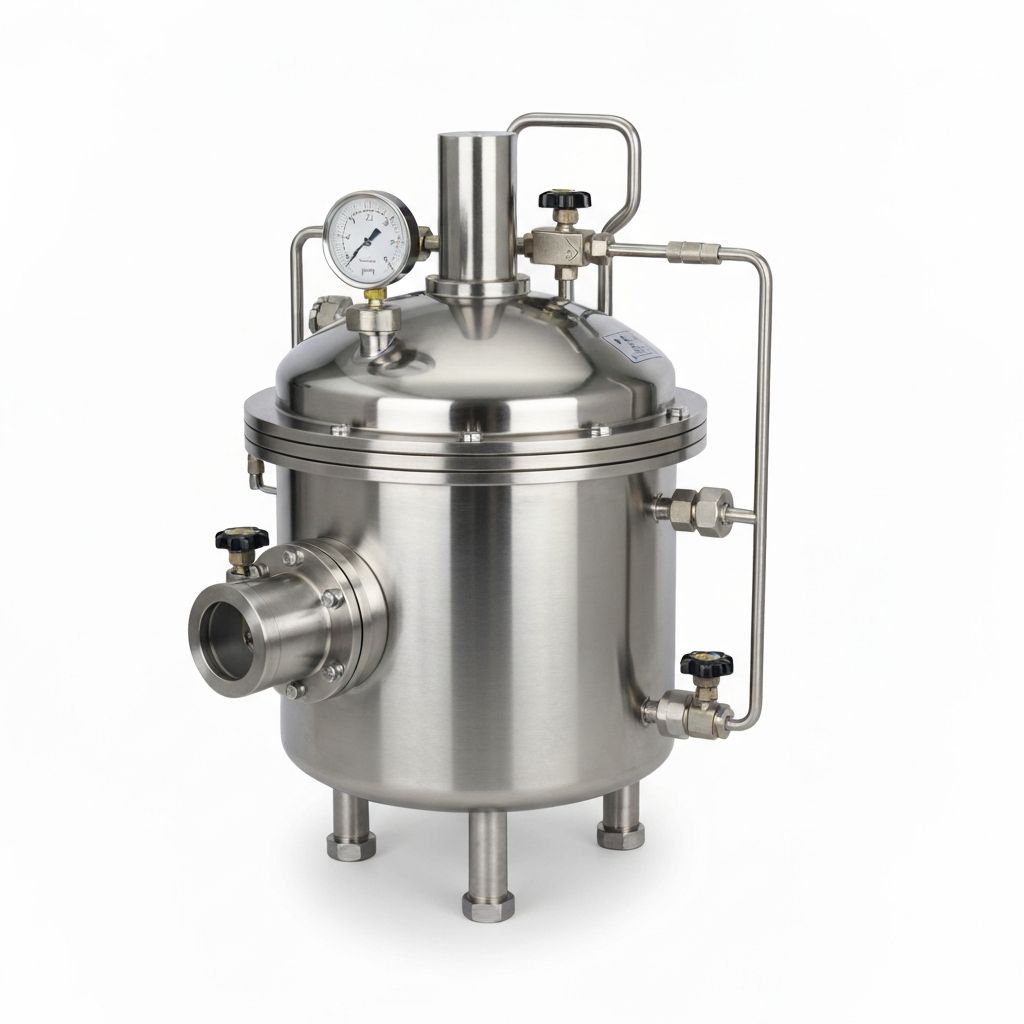
A **high pressure reactor** is a sealed vessel engineered to safely contain chemical reactions at pressures above atmospheric levels — sometimes far above. Unlike standard glassware, these systems are built from robust metals and incorporate sealing mechanisms, pressure relief devices, and stirring assemblies designed for the specific demands of pressurized operation.
A **laboratory autoclave** is essentially the lab-scale version — a smaller, research-oriented pressure reactor typically ranging from 25 mL to 5 L in volume. The term "autoclave" gets used somewhat interchangeably, though it often implies a batch-style vessel with a removable head and integrated stirring.
Then there's the **hydrothermal synthesis reactor** — a specialized subset designed specifically for aqueous reactions at elevated temperatures and pressures. These are the workhorses of nanoparticle synthesis, zeolite preparation, and materials chemistry. They can be as simple as a PTFE-lined stainless steel bomb or as sophisticated as a fully instrumented stirred autoclave with precise temperature ramping and pressure monitoring.
The point is: "high-pressure reactor" is a category, not a product. The right choice depends entirely on what you're putting inside it, what conditions you need, and how much material you need to produce.
---
## The Five Dimensions That Actually Drive Selection
Forget about comparing models for a minute. The real selection process starts with five fundamental questions:
### 1. What pressure range do I need?
This is non-negotiable. A reactor rated for 10 MPa cannot safely operate at 20 MPa. Period. Most laboratory applications fall into one of three bands:
- **Low-to-medium pressure**: up to 100 bar (about 10 MPa)
- **Medium pressure**: 100–500 bar (roughly 10–50 MPa)
- **High pressure**: above 500 bar (50 MPa)
### 2. What temperature range?
Temperature and pressure ratings are linked — the vessel's pressure rating is usually specified at a given temperature, and that rating derates at higher temperatures. A reactor might be rated for 20 MPa at 20°C but only 15 MPa at 300°C. You need both numbers for the actual operating conditions.
### 3. What volume do I actually need?
Lab-scale work typically falls into 1–50 L for R&D and 100–500 L for pilot production. There's a common temptation to buy larger than needed "just in case." This usually backfires — larger vessels cost more, take longer to heat and cool, require more reagents for each run, and often have poorer mixing characteristics for small volumes.
### 4. What chemicals am I putting in here?
This drives material selection. Stainless steel handles a lot. It does not handle concentrated hydrochloric acid, hot sulfuric acid, or chloride-containing environments at elevated temperatures. More on this in the next section.
### 5. Do I need stirring, and if so, what kind?
Most reactions benefit from mixing. The question is how you're going to achieve it without creating a leak path. Magnetic stirring eliminates shaft seals entirely for smaller volumes; mechanical stirring provides more torque for viscous materials but requires more sophisticated sealing.
---
## Material Choice — Where Cost Meets Corrosion Reality
This is where a lot of purchasing decisions go sideways. Someone sees a stainless steel reactor at one price and a Hastelloy reactor at three times that price, assumes the expensive one is just "premium," and buys the cheaper option. Then the first acidic run corrodes the stainless steel, contaminates the product, and ruins the vessel.
**Material selection starts with understanding the chemical environment.**
### 316 Stainless Steel
The workhorse for good reason. It offers a solid balance of strength, general corrosion resistance, and cost-effectiveness. It handles most organic solvents, neutral aqueous solutions, and mild acids. Maximum continuous temperature for 316 is around **425°C**; 316L pushes that to about **550°C** and adds improved weldability and resistance to intergranular corrosion.
### Hastelloy (typically C-276)
The go-to for aggressive acidic environments — hydrochloric acid, sulfuric acid, and strong oxidizing conditions that would eat through stainless steel in hours. It costs significantly more, but for certain applications there's no viable alternative.
### Inconel
Maintains structural integrity at very high temperatures and pressures. It's often specified for supercritical water oxidation (SCWO) research and other extreme thermal environments where both temperature and pressure push the limits of what stainless steel can handle.
### Titanium
Shines in chloride-containing environments — think seawater or brine — where stainless steel suffers from pitting and stress corrosion cracking. It also offers excellent strength-to-weight ratio, though it's less common for general-purpose lab reactors due to higher cost.
### PTFE or Glass Linings
Provide chemical inertness that metals simply cannot match. A PTFE-lined **hydrothermal synthesis reactor** can handle aggressive acids and bases that would corrode even Hastelloy. The trade-off is lower maximum temperature (PTFE typically maxes out around **250°C**) and lower thermal conductivity, which affects heating and cooling rates.
> The decision tree is straightforward but unforgiving: identify your most aggressive reagent and operating temperature, then select the material that survives those conditions with adequate safety margin. Saving money on material and then destroying a vessel — or worse, creating a safety incident — is false economy.
---
## Volume, Pressure, and Temperature: The Interlocking Triangle
These three parameters don't operate independently. They form a triangle where changing one affects what's possible with the others.
### Volume Considerations
Volume seems simple — pick a size that fits your batch. But volume also affects pressure and temperature behavior. Larger vessels take longer to heat and cool. They require more reagent for each run. And critically, the stored energy in a pressurized vessel scales with volume — a 5L vessel at 20 MPa contains far more potential energy than a 500 mL vessel at the same pressure. That has direct implications for safety systems and facility requirements.
### Pressure Ratings Need a Safety Margin
A process that operates at 10 MPa should use a reactor rated for at least **12–15 MPa**. The margin accounts for pressure spikes from exothermic reactions, gas evolution, or heating of volatile solvents. Hydrostatic testing at **1.5× working pressure** is standard practice for verifying vessel integrity.
### Temperature Capabilities Vary Widely
Standard configurations operate from room temperature to **300°C or 350°C**. Higher-temperature applications — up to **500°C** — require 316L stainless steel with appropriate insulation. Cryogenic applications below 0°C need double-jacketed designs with glycol circulation. Some specialized research reactors push to **700°C** for supercritical water oxidation studies, demanding nickel-based alloys like Inconel.
The **high temperature high pressure reactor** category — vessels designed to operate simultaneously at elevated temperatures (250–450°C) and pressures (10–35 MPa) — requires careful material specification and safety system design. These conditions amplify the risks of both mechanical failure and chemical attack, so the margin for error shrinks considerably.
For hydrothermal synthesis specifically, typical operating conditions range from **150°C to 250°C** and pressures from **1 to 20 MPa**. The PTFE liner common in these **hydrothermal synthesis reactors** limits the upper temperature to around 250°C, though specialized quartz or PPL (polyphenylene) liners can extend that range for specific applications.
---
## Stirring and Sealing — The Details That Make or Break an Experiment
These are the components that determine whether a reactor works smoothly for years or becomes a constant source of leaks and failed experiments.
### Magnetic Stirring
The standard for most **laboratory autoclave** applications under 1–2L. A magnetic drive coupling eliminates the need for a physical shaft penetrating the vessel wall. The external motor drives a magnetic rotor inside the vessel, which turns the impeller. No shaft seal means no leak path — a huge advantage for high-pressure applications and for reactions involving hazardous gases.
The trade-off: magnetic couplings have torque limitations. For very viscous materials or large volumes, they may not provide sufficient mixing power. And at extremely high pressures, the magnetic coupling can be physically pushed apart if the pressure rating isn't properly matched.
### Mechanical Stirring
Uses a rotating shaft that physically penetrates the vessel head. It provides more torque for viscous or multi-phase reactions but requires a dynamic seal — typically a PTFE-packed gland or a magnetic fluid seal. These seals require maintenance and can eventually leak. For hydrogenation reactions and other applications involving flammable gases, mechanical seals need careful specification and regular inspection.
### Sealing Systems
This is where many problems originate. The vessel closure — whether bolted flange, quick-open clamp, or threaded — must maintain integrity at operating pressure and temperature while allowing reasonable access for loading and cleaning. For larger **laboratory autoclave** systems, quick-open closures save significant time between runs. For higher-pressure applications, bolted flanges with metal gaskets provide the most reliable seal.
### Mixing Impeller Types
- **Anchor impellers** work well for high-viscosity fluids
- **Turbine impellers** improve gas-liquid mass transfer, which matters enormously for hydrogenation and oxidation reactions
- For simple liquid-phase syntheses, a basic pitched-blade impeller often suffices
---
## Safety: What Separates a Real Reactor from a Hazard
This section isn't optional. A high-pressure reactor stores enough energy to cause serious injury or property damage if it fails. The safety systems built into the equipment are your primary defense.
### Pressure Relief Devices
**Mandatory.** Rupture discs provide a one-time controlled release at a predetermined burst pressure. Pressure relief valves can reseal and are used to vent excess pressure during operation without permanently disabling the vessel. Both should be sized appropriately for the vessel volume and reaction energetics.
### Over-Temperature Protection
Prevents thermal runaway. A properly designed reactor includes independent temperature monitoring that can cut heating power if the setpoint is exceeded. For exothermic reactions, additional safeguards like emergency cooling injection may be necessary.
### Material Certification and Testing
Aren't just paperwork. Vessels should comply with recognized pressure vessel codes:
- **ASME BPVC** (American Society of Mechanical Engineers Boiler and Pressure Vessel Code)
- **PED** (Pressure Equipment Directive) in Europe
- **GB/T 150 and TSG 21** in China
- Or equivalent national standards
Hydrostatic testing to **1.5× design pressure** before shipment validates the vessel's mechanical integrity.
### Operating Protocols
The human component of safety. Anyone using a **high pressure reactor** should be trained on its specific hazards, operating limits, and emergency procedures. This includes understanding the reaction chemistry — exothermic reactions, gas evolution, and thermal decomposition all affect pressure behavior.
---
## Matching the Reactor to the Application
With all the parameters laid out, here's how different applications translate into equipment choices.
### Hydrothermal Synthesis and Nanomaterials
For nanoparticle production — metal oxides, quantum dots, advanced ceramics — a **hydrothermal synthesis reactor** with PTFE liner is the standard. Typical conditions are **150–250°C** and **1–20 MPa**. Volumes are usually small, 25–500 mL. The PTFE liner provides chemical inertness, and magnetic stirring (if needed) is typically sufficient. These vessels are often used in research settings where protecting the precursor materials from metal contamination is critical.
### Catalytic Hydrogenation
This demands reliable gas handling and excellent gas-liquid mixing. A stirred **laboratory autoclave** with gas inlet/outlet ports, precise pressure regulation, and appropriate stirring is essential. Materials are typically 316 stainless steel, but more corrosive substrates may require Hastelloy. Pressure ratings of **1–10 MPa** are common, with temperatures from **50–250°C**.
### Polymer Synthesis
Polymerization reactions often involve viscous media, requiring mechanical stirring with sufficient torque. Temperature control is critical for controlling molecular weight distribution. Volumes vary widely — from 1L for lab-scale synthesis to 100L for pilot production. Materials depend on the monomer chemistry; stainless steel handles most cases, but glass-lined vessels provide visibility and easier cleaning.
### Supercritical Fluid Research
This pushes the limits of what **high temperature high pressure reactor** equipment can do. Supercritical water oxidation (SCWO) operates above **374°C and 22 MPa**. These conditions require Inconel or other nickel-based superalloys, specialized high-temperature sealing systems, and extremely robust safety systems.
### Corrosive Chemistry
If your reaction involves concentrated acids, halides, or strong bases, material selection is the dominant consideration. PTFE-lined vessels handle many corrosive environments but have temperature limits. Hastelloy or titanium may be necessary for high-temperature corrosive applications where liners won't survive.
---
## Key Selection Data at a Glance
| Parameter | Typical Range (Lab Scale) | Application Notes |
|-----------|---------------------------|-------------------|
| Volume | 25 mL – 5 L (R&D); 50 – 500 L (Pilot) | Larger volume = more stored energy and slower heating/cooling |
| Pressure Rating | 1 – 35 MPa (common); up to 500+ bar (specialized) | Always include ≥20% safety margin above operating pressure |
| Temperature Range | –20°C to 400°C (standard); up to 700°C (SCWO) | Pressure rating derates at elevated temperatures |
| 316 Stainless Steel | Up to 425°C (304); up to 550°C (316L) | General-purpose workhorse; avoid concentrated acids/chlorides |
| Hastelloy C-276 | Up to ~500°C | Excellent for strong acids and oxidizing environments |
| PTFE Liner | Up to ~250°C | Chemically inert but lower thermal conductivity |
| Stirring Type | Magnetic (≤2L) / Mechanical (>2L, high viscosity) | Magnetic eliminates shaft seal leak paths |
| Price Range (Lab) | ~USD 3,000 – 30,000+ depending on material and features | Customization and exotic materials increase cost significantly |
---
## What to Look for in a Manufacturer Partner
Specifying the right reactor is half the battle. Finding a **laboratory equipment manufacturer** who can deliver what's specified is the other half.
### Pressure Vessel Certifications
Look for ASME BPVC compliance, PED certification for European markets, or equivalent national standards like China's GB/T 150 and TSG 21. These aren't just paper credentials — they represent verified design, material traceability, and manufacturing quality systems.
### Material Traceability
A quality manufacturer can provide mill certificates for all pressure-bearing materials. For exotic alloys like Hastelloy, Inconel, or titanium, documentation of composition and mechanical properties is essential.
### Customization Capability
Research applications rarely fit perfectly into standard catalog items. The manufacturer should be able to customize port configurations, stirring systems, heating methods, and control interfaces to match your actual workflow.
### Testing and Documentation
Hydrostatic test reports, helium leak test certificates, and material compliance documentation should be standard deliverables. The global **high pressure reactor** market's projected growth to **USD 2.39 billion by 2032** means there are many suppliers competing — but not all of them provide the documentation that makes a vessel truly qualified for research use.
### After-Sale Support
Spare parts availability, seal replacement kits, and technical support matter. A reactor that sits idle because a simple O-ring isn't available is a wasted investment.
The right manufacturer becomes a long-term partner in your research capability — not just a vendor who ships a box and disappears.