Table of Contents
1. Introduction
2. Basic Principles of Hydrothermal Method for Nanomaterial Preparation
3. Hydrothermal Reactor Structure and Design Standards
4. Core Strategy of Temperature and Pressure Control
5. Process Parameter Comparison of Common Nanomaterial Synthesis Methods
6. Standard Experimental Steps of Hydrothermal Synthesis
7. Key Nanomaterial Characterization Technologies
8. Common Experimental Defects and Optimization Methods
9. Industry FAQ
1. Introduction
Nanomaterial performance depend highly on particle size uniformity and structural stability. Traditional synthesis methods have many limits in precise crystal growth control.
Hydrothermal synthesis become one of the most reliable technologies for high-quality nanomaterial preparation. It works in closed high-pressure and high-temperature aqueous environment.
The whole experiment effect rely on three key links. Hydrothermal reactor design, accurate temperature and pressure control, and systematic nanomaterial characterization.
Unreasonable parameter setting and improper equipment operation easily cause particle agglomeration and structural distortion. It reduce nanomaterial application value greatly.
2. Basic Principles of Hydrothermal Method for Nanomaterial Preparation
Hydrothermal method use water as reaction medium in sealed container. High temperature and high pressure change water physical properties.
Supercritical water environment enhance raw material dissolution and molecular movement. It promote uniform nucleation and slow crystal growth.
This synthesis mode avoid high-temperature calcination damage. It keep complete and regular microstructure of nanomaterials.
Different reaction parameters can adjust material morphology, particle size and dispersion. It support customized nanomaterial preparation.
3. Hydrothermal Reactor Structure and Design Standards
3.1 Core Reactor Composition
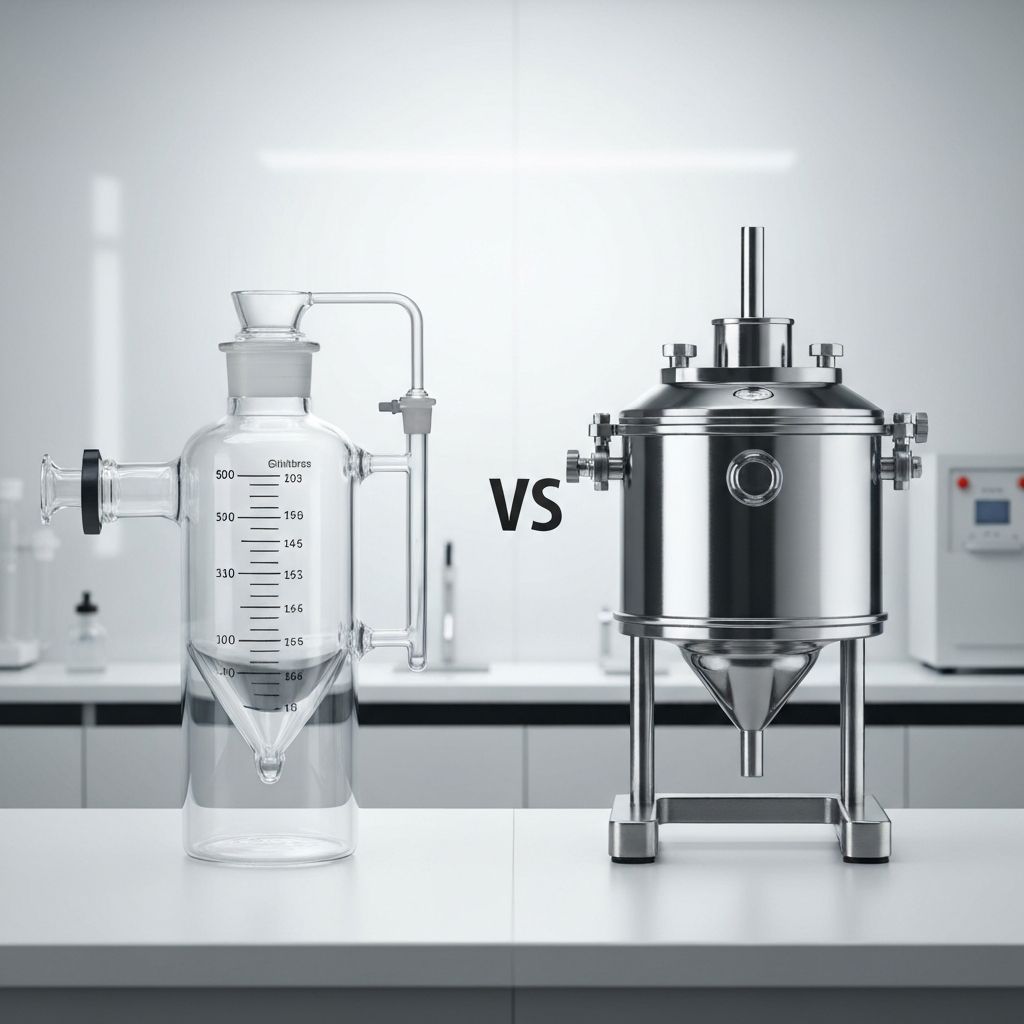
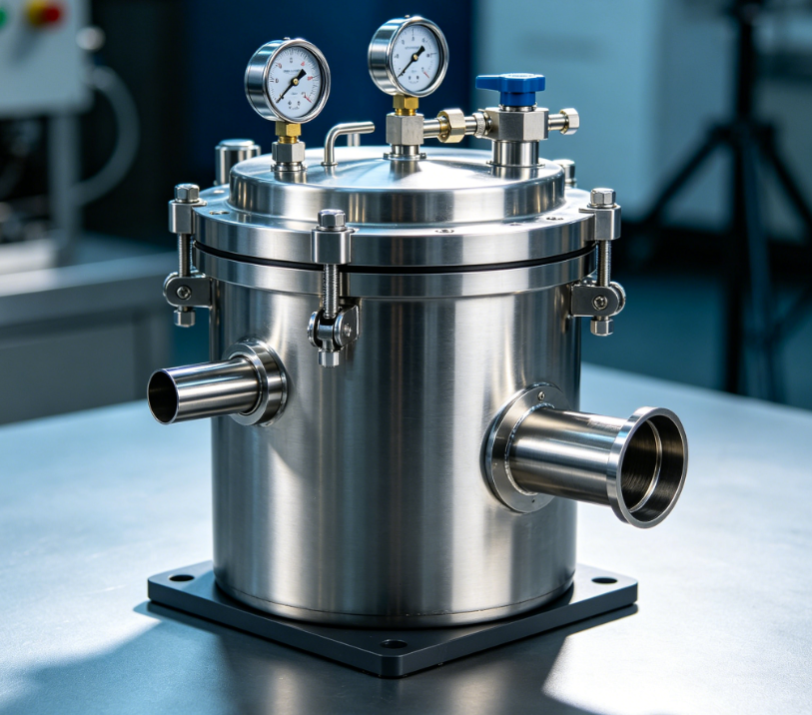
A standard hydrothermal reactor include stainless steel outer tank and PTFE inner liner. The liner resist corrosion and high temperature erosion.
Sealing ring and pressure relief valve are essential safety parts. They prevent pressure overload and liquid leakage in high-pressure reaction.
3.2 Design Requirements for Precision Synthesis
Inner liner volume need to match liquid filling ratio. Standard filling range keep 60% to 80% of total volume.
Too high filling rate cause excessive internal pressure. Too low rate lead to insufficient reaction atmosphere.
Reactor wall thickness must meet pressure bearing standard. It ensure stable operation under 200℃ and 3MPa working condition.
4. Core Strategy of Temperature and Pressure Control
Temperature and pressure control is the core of stable hydrothermal synthesis. Tiny parameter fluctuation affect final product quality directly.
4.1 Temperature Control Standard
Most nanomaterial synthesis adopt 100℃ to 200℃ temperature range. Low temperature lead to incomplete nucleation.
Temperature over 220℃ easily cause nanostructure collapse and particle overgrowth. It destroy material microstructure.
Constant temperature heating mode is better than rapid heating. It guarantee uniform crystal growth speed.
4.2 Pressure Control Standard
Reaction pressure rise with temperature increase in sealed hydrothermal reactor. Automatic pressure monitoring is necessary.
Ordinary nanomaterial reaction pressure maintain 1MPa to 3MPa. Excessively high pressure bring structural distortion risk.
Stable pressure environment effectively reduce particle agglomeration. It improve material dispersion performance.
5. Process Parameter Comparison of Common Nanomaterial Synthesis Methods
The following test data come from Materials Research Journal standard experiment. It shows the performance advantages of hydrothermal synthesis in nanomaterial preparation.
Synthesis Method | Reaction Temperature | Working Pressure | Particle Size Uniformity | Structural Integrity Rate |
Sol-Gel Method | 60-100℃ | Normal Pressure | General | 82.3% |
High-Temperature Calcination | 400-800℃ | Normal Pressure | Poor | 75.6% |
Hydrothermal Synthesis | 100-200℃ | 1-3MPa | Excellent | 96.8% |
Hydrothermal method have obvious advantages in low-temperature synthesis and structural protection. It is more suitable for high-precision nanomaterial preparation.
6. Standard Experimental Steps of Hydrothermal Synthesis
First, dissolve precursor materials in deionized water. Stir evenly to form stable homogeneous solution.
Pour the solution into hydrothermal reactor. Control filling ratio strictly between 60% and 80%.
Seal the reactor completely. Set target temperature and pressure for constant temperature reaction.
After reaction finish, cool the reactor to room temperature naturally. Take out and centrifuge the product.
Clean and dry the sample. Prepare for subsequent nanomaterial characterization test.
7. Key Nanomaterial Characterization Technologies
Nanomaterial characterization verify synthesis quality from morphology, size and structure dimensions.
SEM testing observe microscopic morphology and particle dispersion. It judge whether agglomeration exists.
XRD analysis detect crystal structure and purity. Confirm complete crystallization of target material.
Particle size analyzer test size distribution. Data support parameter optimization for next experiment.
8. Common Experimental Defects and Optimization Methods
Uneven particle size is the most common problem. It mainly caused by unstable temperature control.
Properly extend constant temperature time can improve uniformity. Avoid rapid heating and rapid cooling.
Particle agglomeration relate to excessive precursor concentration. Adjust solution concentration properly to solve it.
Structural collapse usually come from over high temperature. Strictly control reaction temperature below 200℃.
9. Industry FAQ
Q1: Why hydrothermal synthesis is better for nanomaterial preparation?
A1: Hydrothermal method use mild high temperature and high pressure environment. It protect nanostructure integrity. It produce more uniform particle size than normal pressure synthesis methods.
Q2: What is the best temperature range for hydrothermal reaction?
A2: 100℃ to 200℃ is the most stable range. This range balance reaction efficiency and structural stability, avoid nanostructure damage.
Q3: What core parameters need control in hydrothermal reactor operation?
A3: Liquid filling ratio, reaction temperature and internal pressure are three core parameters. Stable control of these items ensure repeatable experimental results.
Q4: What does nanomaterial characterization mainly test?
A4: It mainly includes microscopic morphology, crystal structure, particle size distribution and material purity. These data judge the final synthesis quality of hydrothermal products.