Table of Contents
1. Unique Production Requirements Of Pharmaceutical Pilot Workshop Reactors
2. Five Typical Sourcing Errors & Corresponding Negative Consequences 2.1 Ignore Full Sanitary Stainless Steel Material Standard For Pharmaceutical Grade 2.2 Underestimate Required Electric Lifting Stroke Based On Pilot Batch Operation 2.3 Skip Explosion-Proof Electrical Matching For Solvent Reaction Workshops 2.4 Neglect Precise Temperature & PH Closed-Loop Control For Pharmaceutical Synthesis 2.5 Only Compare Unit Price Without Verifying GMP Compliance Documentation
3. Correct Sourcing Checklist To Avoid The Five Mistakes
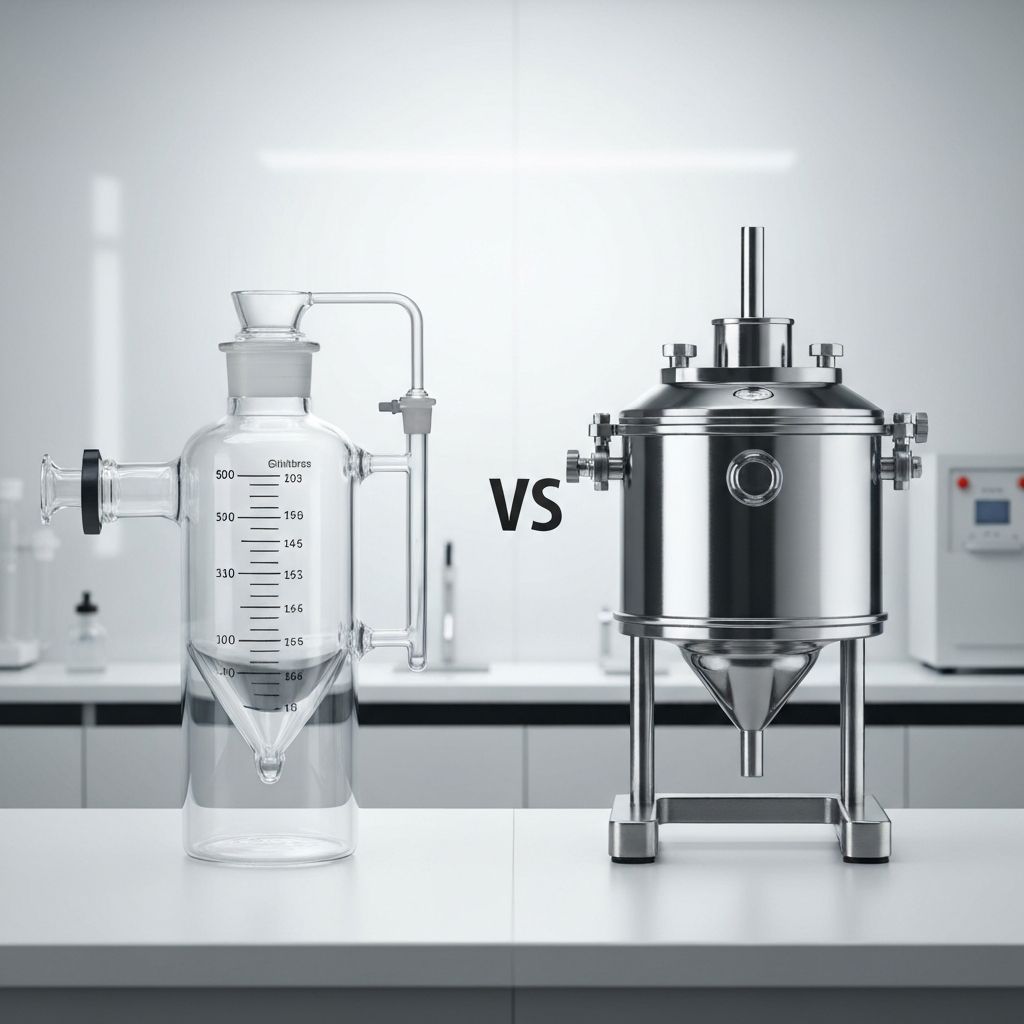
4. Performance Contrast: Qualified Pilot Pharmaceutical Electric Lifting Reactor VS Non-Standard General Reactor
5. Industry FAQ For Pharmaceutical R&D Lab Procurement Engineers
1. Unique Production Requirements Of Pharmaceutical Pilot Workshop Reactors
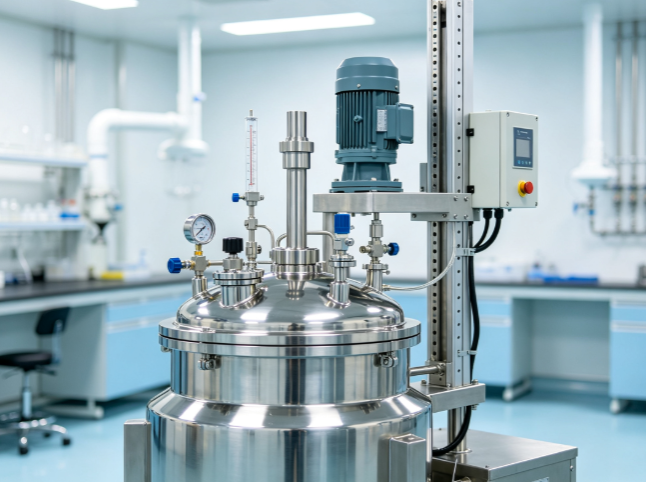
Pharmaceutical pilot workshops conduct small-batch drug synthesis, extraction, crystallization and purification tests before formal mass production. Unlike chemical general reactors, pilot pharmaceutical lifting reactors have strict standards on sanitary material, full process precise parameter control, explosion-proof safety and GMP audit traceability. Electric lifting design is essential for pilot lines to realize automatic tank cover opening, raw material feeding, tank interior cleaning and residue discharge without heavy manual handling. Many procurement staff with only general chemical equipment purchasing experience easily make typical sourcing mistakes, leading to unqualified pilot test data, delayed project progress or failure to pass drug regulatory factory inspection. This article sorts out the five most frequent sourcing mistakes and targeted avoidance solutions for pharmaceutical pilot electric lifting reactor procurement.
2. Five Typical Sourcing Errors & Corresponding Negative Consequences
2.1 Ignore Full Sanitary Stainless Steel Material Standard For Pharmaceutical Grade
Many buyers only require stainless steel without specifying pharmaceutical sanitary grade, and accept ordinary industrial 304 steel instead of mirror polished 316L sanitary stainless steel. General industrial stainless steel has rough inner welds, uneven surface finish and dead corners that trap drug residues, bacteria and mold. Consequence: Cross-contamination between different drug batches, unstable experimental purity data; equipment fails GMP surface hygiene inspection during audit. Qualified pilot reactors adopt full 316L sanitary mirror polishing, seamless inner welding and dead-angle-free transition arc for tank body, lifting frame and contact parts.
2.2 Underestimate Required Electric Lifting Stroke Based On Pilot Batch Operation
Purchasers select short standard lifting stroke according to small lab beaker test, ignoring the operation space needed for medium-sized pilot tank cleaning, stirring disassembly and large raw material barrel feeding. Most standard off-the-shelf electric lifting reactors only carry 400–600mm stroke. Pilot tanks with 50L–500L volume need stroke above 1000mm to fully separate lid and tank body. Consequence: Operators cannot reach the full tank interior, residual drug cannot be completely cleaned; stirring shaft disassembly becomes dangerous manual high-altitude work, low pilot workshop safety rating. Correct sourcing logic: Confirm tank total height, stirring paddle length and cleaning equipment size to customize 1000–3000mm long electric lifting stroke.
2.3 Skip Explosion-Proof Electrical Matching For Solvent Reaction Workshops
Lots of pharmaceutical synthesis uses ethanol, methanol, acetone and other flammable organic solvents, but buyers choose ordinary non-explosion-proof motor, control box and lifting switch to cut initial cost. Ordinary electrical components produce electric spark during startup and braking, bringing serious explosion risk in closed pilot workshop. Consequence: Local safety supervision department orders equipment shutdown; hidden fire hazard stops all pilot R&D schedules. Pharmaceutical solvent pilot lines must configure full explosion-proof electric lifting system: Ex d II BT4 / CT6 explosion-proof motor, explosion-proof control cabinet and sealed explosion-proof travel switches.
2.4 Neglect Precise Temperature & PH Closed-Loop Control For Pharmaceutical Synthesis
Some buyers only request basic heating and stirring function, without checking closed-loop automatic constant temperature and online real-time PH continuous monitoring modules. Drug crystallization, extraction and purification demand narrow stable temperature bands and precise PH value; simple open-loop control creates large parameter fluctuation. Consequence: Pilot experimental data cannot repeat stably, inconsistent crystal form and drug yield, delaying formal production scale-up progress. Standard pharmaceutical pilot lifting reactors integrate PID closed-loop temperature control and online PH electrode linkage adjustment, record full parameter curve automatically for data traceability.
2.5 Only Compare Unit Price Without Verifying GMP Compliance Documentation
Many procurement teams judge suppliers merely by equipment unit price, ignoring complete GMP validation documents, material certification and factory inspection records provided by manufacturers. Low-cost general reactors only offer simple equipment delivery without material test reports, sanitation verification files and traceability certificates. Consequence: Unable to submit complete equipment validation documents during drug regulatory GMP audit, pilot workshop production qualification suspended. Qualified suppliers provide 316L material heat certificate, sanitary polishing test report, explosion-proof third-party certificate and full GMP equipment validation dossier together with the lifting reactor.
3. Correct Sourcing Checklist To Avoid The Five Mistakes
1. Material: Mandatory full 316L sanitary mirror stainless steel for all medium contact parts, request weld smoothness test report.
2. Lifting stroke: Calculate tank height + stirring assembly length, customize stroke ≥1000mm for 50L–500L pilot tanks.
3. Electrical safety: Confirm all motor, control box, lifting switch adopt matched explosion-proof grade based on solvent category.
4. Process control: Require built-in PID closed-loop temperature control + online real-time PH continuous monitoring with automatic data recording.
5. Document package: Sign contract to clarify supplier shall provide complete GMP validation, material and explosion-proof certification set before delivery.
4. Performance Contrast: Qualified Pilot Pharmaceutical Electric Lifting Reactor VS Non-Standard General Reactor
表格
Evaluation Item | GMP Compliant Pharmaceutical Pilot Electric Lifting Reactor | Ordinary General Chemical Electric Lifting Reactor | Pilot Workshop Actual Loss |
Tank Contact Material | 316L sanitary mirror polished stainless steel | Ordinary rough 304 industrial steel | Drug cross-contamination, audit failure |
Electric Lifting Stroke | Custom 1000–3000mm long stroke | Fixed short stroke 400–600mm | Incomplete tank cleaning, operation safety risk |
Electrical Safety Configuration | Full explosion-proof matched electrical system | Common non-explosion motor & control box | Safety inspection shutdown, fire hazard |
Parameter Control System | Closed-loop temp + real-time PH online linkage | Simple open-loop heating & stirring only | Unrepeatable pilot experimental data |
Supporting Compliance Documents | Complete GMP validation & material certificates | No special pharmaceutical certification | Unable to pass drug regulatory audit |
5. Industry FAQ For Pharmaceutical R&D Lab Procurement Engineers
Q1: Why pharmaceutical pilot reactors cannot use ordinary 304 stainless steel instead of 316L sanitary steel? A1. 304 industrial steel has weak acid and solvent corrosion resistance, rough inner surfaces leave residue dead corners. 316L mirror sanitary grade meets pharmaceutical hygiene standard to avoid batch cross-contamination and pass GMP inspection. Q2: What explosion-proof grade is standard for solvent-based pharmaceutical pilot workshops? A2. For ethanol, methanol and general flammable solvents, Ex d II BT4 is basic standard; for highly volatile strong-risk solvents such as dichloromethane, Ex d II CT6 explosion-proof matching is required. Q3: Is long customized electric lifting stroke a mandatory configuration for 100L–500L pilot reaction tanks? A3. Yes. Short standard stroke cannot fully separate tank lid and tank body, operators cannot thoroughly clean tank interior and disassemble stirring assembly, which fails daily pilot operation efficiency and hygiene management rules. Q4: What GMP documents must the supplier deliver together with the lifting reactor? A4. 316L stainless steel material mill certificate, inner surface sanitary polishing test report, explosion-proof third-party certification, equipment installation qualification (IQ) and operation qualification (OQ) full validation files.