Table of Contents
1. Introduction: The Importance of Hydrothermal Synthesis Autoclave Selection
2. Key Components Selection of Hydrothermal Synthesis Autoclaves
3. Parameter Optimization of Autoclave Temperature and Pressure Control
4. Application of Hydrothermal Autoclaves in Nanomaterial Preparation and Crystal Growth Equipment
5. Comparison of Core Parameters of Common Autoclaves
6. Common Selection Mistakes and Solutions
7. FAQs About Hydrothermal Synthesis Autoclaves
1. Introduction: The Importance of Hydrothermal Synthesis Autoclave Selection
Hydrothermal synthesis autoclaves are core equipment in material science, especially in nanomaterial preparation and crystal growth. Choosing the right autoclave directly affects the quality of products, experimental safety, and production efficiency.
Many researchers and enterprises often ignore the matching between components and parameters when selecting equipment. This leads to frequent failures, low product yield, or even safety accidents.
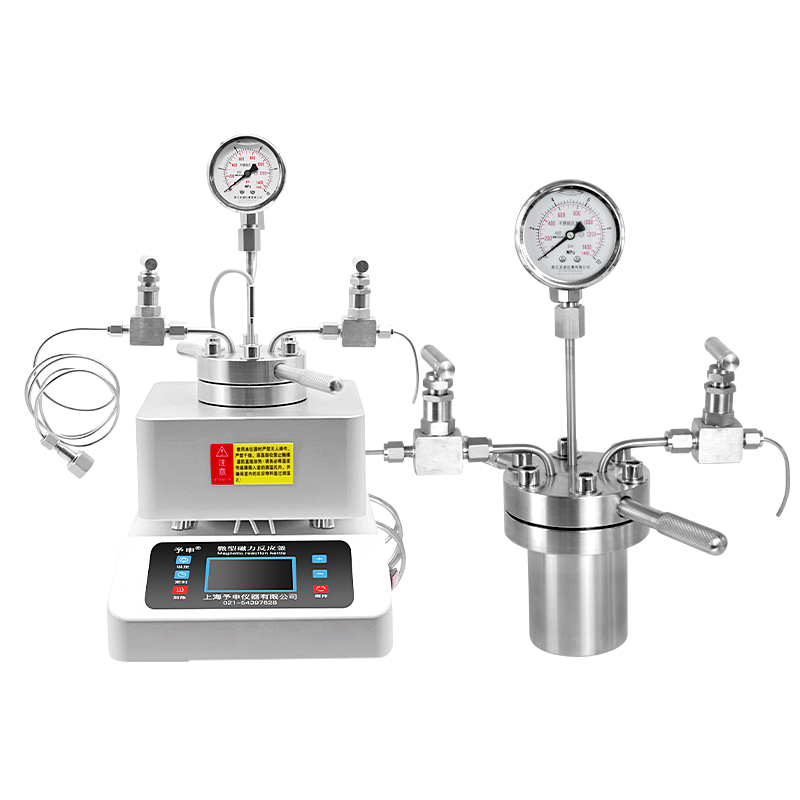
This guide focuses on the key links of hydrothermal synthesis autoclave selection, from PTFE lined autoclave selection to stainless steel shell material selection, and then to autoclave temperature and pressure control optimization. It provides professional and practical suggestions for industry practitioners.
2. Key Components Selection of Hydrothermal Synthesis Autoclaves
2.1 PTFE Lined Autoclave Selection Essentials
2.1.1 Core Performance Indicators of PTFE Liners
PTFE (polytetrafluoroethylene) liners are the core of corrosion resistance in hydrothermal synthesis autoclaves. Their performance directly determines the applicability of the autoclave to different reaction systems.
The maximum operating temperature of standard PTFE liners is ≤240℃, and the safe operating temperature is recommended to be no more than 200℃ to avoid liner deformation or damage. The maximum working pressure is generally ≤3MPa (30bar), which is suitable for most laboratory-scale nanomaterial preparation reactions.
The thickness of the PTFE liner also affects its service life. For general reactions, a liner with a thickness of 3-5mm is sufficient; for reactions with strong corrosion or high pressure, the thickness should be increased to 5-8mm.
2.1.2 Application Scenarios of PTFE Lined Autoclaves
PTFE lined autoclaves are mainly used in acidic, alkaline, or corrosive reaction systems, which is the biggest advantage compared with other lined autoclaves.
In nanomaterial preparation, such as the synthesis of zirconia nanoparticles or metal oxide nanowires, PTFE liners can avoid the corrosion of reactants on the autoclave shell, ensuring the purity of the final product.
It should be noted that PTFE liners are not suitable for reactions involving high-temperature molten salts or strong oxidants, as these substances will accelerate the aging and damage of the liner.
2.2 Selection of Stainless Steel Shell for Hydrothermal Autoclaves
2.2.1 Common Material Types and Selection Criteria
The stainless steel shell of hydrothermal synthesis autoclaves is responsible for bearing high pressure and protecting the inner liner. The most commonly used material is 316L stainless steel, which has good corrosion resistance and pressure-bearing capacity.
316L stainless steel can withstand a maximum temperature of 300℃ and a maximum pressure of 10MPa, which is fully compatible with the performance of PTFE liners. For high-pressure reactions (above 5MPa), it is recommended to choose thick-walled 316L stainless steel shells with a wall thickness of 10-15mm.
For some special high-temperature reactions (above 240℃), Hastelloy can be selected as the shell material, but its cost is 3-5 times that of 316L stainless steel, so it is only suitable for special scenarios.
2.2.2 Matching Principles Between Shell and Liner
The size of the stainless steel shell must match the PTFE liner. The gap between the shell and the liner should be controlled at 2-3mm to ensure that the liner is evenly stressed during the reaction.
If the gap is too large, the liner will easily deform under high temperature and pressure; if the gap is too small, the liner will be squeezed, leading to damage. In addition, the shell's sealing performance must be strictly checked to prevent gas leakage during the reaction.
3. Parameter Optimization of Autoclave Temperature and Pressure Control
3.1 Core Indicators of Temperature and Pressure Control
Autoclave temperature and pressure control is the key to ensuring the stability of hydrothermal reactions. The accuracy of temperature control directly affects the crystal growth rate and nanomaterial particle size distribution.
For most nanomaterial preparation reactions, the temperature control accuracy should be ±0.5℃, and the pressure control accuracy should be ±0.1MPa. For high-precision crystal growth equipment, the temperature control accuracy needs to be improved to ±0.1℃, and the pressure control accuracy to ±0.05MPa.
According to CDC research data, improper pressure control accounts for 23% of reaction failures, because it will affect the saturation of the reaction system and lead to uneven product quality.
3.2 Parameter Optimization Methods for Different Reaction Types
3.2.1 Optimization for Nanomaterial Preparation
In the preparation of nanoparticles, the temperature rise rate should be controlled at 2-5℃/min to avoid uneven particle size caused by rapid temperature rise. The pressure should be maintained at a stable level, and the fluctuation range should not exceed ±0.2MPa.
Taking the synthesis of Fe-ZrO2 nanomaterials as an example, when the temperature is controlled at 180℃ and the pressure at 2.0MPa, the particle size of the prepared nanomaterials is between 53.3-61.4nm, and the particle size distribution is uniform.
3.2.2 Optimization for Crystal Growth Equipment
Crystal growth requires a stable temperature gradient and pressure environment. The temperature gradient between the two ends of the autoclave should be controlled at 5-10℃, and the pressure should be kept constant during the entire growth process.
For the growth of synthetic quartz crystals, the temperature is usually maintained at 280-300℃, the pressure at 8-10MPa, and the temperature gradient at 8℃, which can ensure the formation of high-quality large crystals.
4. Application of Hydrothermal Autoclaves in Nanomaterial Preparation and Crystal Growth Equipment
4.1 Application in Nanomaterial Preparation
Hydrothermal synthesis autoclaves are widely used in the preparation of various nanomaterials, including nanoparticles, nanowires, and nanotubes. Their high-temperature and high-pressure environment can promote the formation of nanostructures that are difficult to synthesize under normal conditions.
In the preparation of photocatalytic nanomaterials, such as Ba-ZrO2 nanoparticles, the use of PTFE lined autoclaves can ensure the purity of the product, and the optimized temperature and pressure control can make the degradation rate of organic pollutants reach 99% within 30 minutes.
4.2 Integration with Crystal Growth Equipment
Hydrothermal synthesis autoclaves are important components of crystal growth equipment. They provide a controlled environment for crystal growth, enabling the growth of high-quality crystals that are difficult to obtain by other methods.
Synthetic emeralds, rubies, and other gemstones are usually grown in hydrothermal autoclaves. By precisely controlling the temperature, pressure, and solution composition, large and well-formed crystals can be obtained.
5. Comparison of Core Parameters of Common Autoclaves
Autoclave Type | Liner Material | Max Operating Temperature | Max Working Pressure | Temperature Control Accuracy | Main Application |
PTFE Lined Autoclave | PTFE | 240℃ | 3MPa | ±0.5℃ | Laboratory-scale nanomaterial preparation |
PPL Lined Autoclave | PPL | 280℃ | 5MPa | ±0.5℃ | High-temperature nanomaterial synthesis |
Stainless Steel Autoclave (No Liner) | 316L Stainless Steel | 300℃ | 10MPa | ±0.1℃ | Crystal growth equipment |
6. Common Selection Mistakes and Solutions
Mistake 1: Blindly pursuing high parameters, ignoring the actual reaction needs. For example, choosing a high-pressure autoclave for low-pressure reactions will increase the cost and operational complexity.
Solution: Clarify the reaction temperature, pressure, and corrosion of the reaction system first, and select equipment that matches the actual needs.
Mistake 2: Neglecting the matching between the PTFE liner and the stainless steel shell, leading to liner damage during use.
Solution: Strictly follow the matching principle of shell and liner, and check the gap and sealing performance before use.
Mistake 3: Ignoring the accuracy of temperature and pressure control, resulting in uneven product quality.
Solution: According to the reaction requirements, select a temperature and pressure control system with appropriate accuracy, and calibrate the equipment regularly.
7. FAQs About Hydrothermal Synthesis Autoclaves
Q1: What is the maximum service life of a PTFE liner in a PTFE lined autoclave?
A1: Under normal use and proper maintenance, the service life of a PTFE liner is 200-300 times. Frequent use at high temperature (above 200℃) or strong corrosion will shorten the service life to 100-150 times.
Q2: How to adjust the temperature and pressure parameters when preparing nanomaterials with different particle sizes?
A2: Generally, increasing the reaction temperature and pressure will reduce the particle size of nanomaterials. For example, when the temperature is increased by 20℃, the particle size can be reduced by 10-15nm. However, it is necessary to avoid excessive temperature and pressure, which will lead to particle agglomeration.
Q3: Can the hydrothermal synthesis autoclave be used for the growth of all types of crystals?
A3: No. Hydrothermal synthesis autoclaves are mainly suitable for crystals that are soluble in high-temperature and high-pressure water, such as quartz, emeralds, and rubies. For crystals with low solubility, other crystal growth equipment is needed.
Q4: What are the key points for the maintenance of the autoclave temperature and pressure control system?
A4: The temperature sensor and pressure sensor should be calibrated once a month to ensure the accuracy of the data. The pressure relief valve should be checked regularly to prevent failure and ensure safe operation.