Table of Contents
Introduction
The Technology Behind Self-Pressure-Relief
Critical Performance Specifications
Unmatched Safety Advantages
Unlocking New Synthetic Capabilities
Selection Criteria for the Modern Laboratory
Conclusion
Frequently Asked Questions (FAQ)
1. Introduction
Microwave-assisted chemistry has fundamentally transformed how synthetic chemists approach reaction optimization and development. The ability to heat reactions volumetrically, directly, and instantaneously offers dramatic reductions in reaction times and improvements in yield and purity. However, the very conditions that make microwave synthesis so powerful—high temperatures and pressures in sealed vessels—also introduce significant safety risks. Rapid, uncontrolled pressure build-up from volatile solvents or gaseous byproducts can lead to vessel failure and potential hazards.
The self-pressure-relief microwave reactor represents the critical evolution that has unlocked the full potential of this technology. By integrating automated pressure management directly into the system architecture, these reactors allow chemists to safely perform high-temperature, high-pressure reactions that were previously too risky or complex to attempt. This review examines the technology, benefits, and critical specifications of self-pressure-relief microwave reactors and why they have become indispensable tools in modern chemical synthesis.
2. The Technology Behind Self-Pressure-Relief
The core innovation of a self-pressure-relief microwave reactor is its ability to automatically and safely vent excess pressure during a reaction, without compromising the integrity of the sealed system.
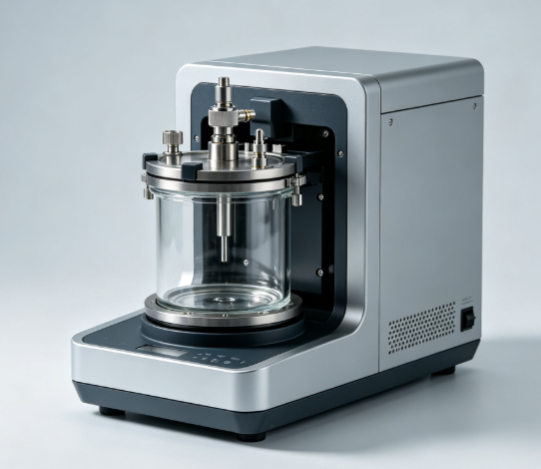
The design typically integrates several key components that work in concert. At the heart of the system is the reaction vessel itself, which is often a single-mode cavity that ensures uniform and highly focused microwave energy. This is complemented by a sealing mechanism, a pressure relief assembly (often spring-loaded), and a sophisticated control system.
The operational principle is elegant in its simplicity. During a reaction, if the internal pressure rises above a pre-determined safe threshold, the automatic pressure relief component activates. The system safely vents the excess gaseous byproducts through an exhaust pathway, preventing dangerous over-pressurization. Once the pressure drops back below the safety limit, the system instantly reseals, allowing the reaction to continue undisturbed. This cycle can repeat as needed throughout the experiment. After the reaction is complete, the system performs a controlled cooling and final pressure release before allowing the operator to open the vessel.
This dynamic pressure management provides a significant advantage over conventional systems that either lack any pressure relief or only vent pressure after a failure has occurred.
3. Critical Performance Specifications
When evaluating a self-pressure-relief microwave reactor, several key performance parameters define its capability and suitability for different applications.
Pressure and Temperature Ratings
The maximum operating pressure and temperature are the most fundamental specifications. These determine the range of reactions that can be safely performed.
Pressure: Systems vary widely. Standard research systems may operate up to 300 psi (approx. 2 MPa), while high-performance units can reach 435 psi (3 MPa) or more. For the most demanding digestion applications, industrial systems can handle up to 2,200 psi (15 MPa).
Temperature: Typical maximum temperatures range from 250°C to 300°C, with some specialized systems capable of reaching 300°C and beyond.
Vessel Volume and Material
The size and construction of the reaction vessel dictate the scale of synthesis that can be performed.
Volume Range: Single-mode systems offer a variety of vessel sizes. Common options include 10 mL, 35 mL, and 100 mL vials for pressurized reactions. For larger-scale synthesis, some systems support 80 mL to 500 mL vessels for pressurized reactions, and up to 2,000 mL for atmospheric pressure work.
Material Compatibility: Vessels must be transparent to microwaves and chemically resistant. Common materials include glass, Teflon® (PTFE), and silicon carbide for reactions that etch glass. For high-pressure applications, vessels are often reinforced with composite fiber outer layers.
Pressure Control Technology
The specific method of pressure control distinguishes different systems.
Active Venting: This is the hallmark of self-pressure-relief systems. Some manufacturers use patented technologies like ActiVent®, which actively and automatically vents gaseous byproducts as they form.
Passive Venting: Other systems use spring-loaded mechanisms or elastomeric seals that open at a specific pressure threshold and reseal when the pressure drops.
Intelligent Pressure Control: Advanced systems feature automated, intelligent pressure control that can be programmed to manage pressure profiles throughout an experiment, offering the highest level of safety and control.
4. Unmatched Safety Advantages
The primary driver for adopting self-pressure-relief microwave reactors is safety. The technology directly addresses the most significant risks associated with pressurized microwave chemistry.
Risk of Vessel Failure: The most immediate benefit is the dramatic reduction in the risk of vessel rupture or "bursting". By automatically releasing overpressure, the system prevents the conditions that lead to catastrophic failure, protecting both the operator and the equipment.
Protection from Runaway Reactions: Exothermic reactions can rapidly generate heat and pressure, leading to dangerous "runaway" conditions. The ability of a self-pressure-relief system to vent pressure in real-time provides a critical safety buffer. The instant shut-off capability of microwave energy, combined with active pressure management, helps prevent these thermal runaways.
Reaction Containment: While venting, the system safely directs any released gases through a dedicated exhaust line, keeping hazardous fumes contained and away from the operator and the laboratory environment. This ensures that even in the event of a pressure release, the procedure remains safe.
Interlocks and Monitoring: Modern systems are also equipped with multiple layers of safety. These include door interlocks that prevent opening until the system is at a safe temperature and pressure, as well as real-time pressure and temperature monitoring that provides continuous data for analysis and validation.
5. Unlocking New Synthetic Capabilities
Beyond safety, the pressure-relief capability fundamentally expands the scope of what is possible in microwave synthesis.
Higher Temperature Reactions: The ability to safely manage pressure allows chemists to push reactions to higher temperatures than would be possible in a simple sealed vessel. Many reactions benefit from temperatures above the boiling point of the solvent, and self-pressure-relief systems make this practical and safe.
Handling Gaseous Byproducts: Many important reactions produce gaseous byproducts (e.g., CO₂, N₂) that can cause rapid pressure build-up. A self-pressure-relief system can safely vent these gases as they form, allowing the reaction to proceed to completion without the risk of over-pressurization. This capability is crucial for applications like hydrolysis, decarboxylation, and other reactions where gas evolution is unavoidable.
Scalability and Reproducibility: The automated and consistent pressure control offered by these systems improves the reproducibility of reactions. By managing a critical variable (pressure), these reactors produce more consistent results, which is essential for method development and scale-up.
6. Selection Criteria for the Modern Laboratory
Choosing the right self-pressure-relief microwave reactor requires careful consideration of the intended applications. Here is a comparative overview of key specifications for representative systems:
Feature | Standard Research System | High-Performance Synthesis System | Industrial Digestion System |
Model Example | CEM Discover | CEM Discover 2.0 | Sineo TANK eco |
Max. Pressure | 300 psi (2 MPa) | 435 psi (3 MPa) | 2,200 psi (15 MPa) |
Max. Temperature | 300°C | 300°C+ | 300°C |
Vessel Volume | 10 mL, 80 mL | 10 mL, 35 mL, 100 mL | 6-10 positions |
Pressure Relief | Automated venting | ActiVent® active venting | Self-resealing venting |
Key Application | General synthesis | Advanced synthesis, method development | Sample digestion, trace analysis |
When selecting a system, start by defining your application. For organic and medicinal chemistry, a flexible system with a wide range of vessel sizes is essential. For materials science, high-temperature capabilities may be critical. For routine digestion and analysis, a robust system with high-pressure vessels and a large sample capacity is needed. Evaluate the pressure and temperature requirements of your most demanding protocols, and ensure the system's safety features match the risk profile of your work. Also, consider the software's ease of use, data management capabilities (e.g., 21 CFR Part 11 compliance for regulated industries), and available accessories like autosamplers and cameras.
7. Conclusion
Self-pressure-relief microwave reactors represent a defining advancement in modern synthetic chemistry. By integrating automated, intelligent pressure control, these systems have transformed a potentially hazardous technique into a routine, safe, and highly productive tool. They have unlocked the ability to perform high-temperature, high-pressure reactions with confidence, enabling chemists to explore new reaction space, improve yields, and accelerate discovery. For any laboratory seeking to leverage the full power of microwave synthesis, a reactor with robust, integrated self-pressure-relief capabilities is not just an upgrade—it is an essential requirement for safe and efficient chemical synthesis.
8. Frequently Asked Questions (FAQ)
Q: What is the main difference between a self-pressure-relief reactor and a standard sealed vessel microwave reactor?
A: A standard sealed vessel has no mechanism to release pressure during a reaction, which can lead to dangerous over-pressurization and vessel failure. A self-pressure-relief system actively monitors internal pressure and automatically vents excess gas to maintain safe operating conditions, preventing rupture.
Q: How does the self-pressure-relief mechanism work without compromising the reaction?
A: The system is designed to vent only when pressure exceeds a safe threshold. It releases gas through a controlled pathway and then instantly reseals once the pressure drops back to a safe level. This allows the reaction to continue safely without interruption.
Q: What types of reactions benefit most from a self-pressure-relief microwave reactor?
A: Reactions that run at high temperatures, use volatile solvents, or produce gaseous byproducts (e.g., CO₂, N₂) benefit the most. The system safely manages the associated pressure risks, allowing these reactions to be performed safely and efficiently.
Q: Is a self-pressure-relief reactor more expensive than a standard microwave reactor?
A: Yes, the advanced engineering and safety systems make them more expensive upfront. However, this cost is often justified by the increased safety, expanded reaction capabilities, and reduced risk of costly vessel failures and lost experiments.
Q: Can I use a self-pressure-relief reactor for open-vessel (atmospheric pressure) reactions as well?
A: Yes. Most modern systems are versatile and can be used for both pressurized and non-pressurized reactions. They can accommodate standard laboratory glassware for open-vessel work.