Table of Contents
1. Product Overview
2. Common Reactor Liner Materials
3. Core Parameter Performance Comparison
4. Key Structural Components
5. Main Laboratory Application Scenarios
6. Standard Operating Guidelines
7. Industry Technical FAQ
1. Product Overview
Hydrothermal synthesis reactor is a sealed high-pressure reaction vessel. It create controlled high temperature and high pressure environments for chemical and material synthesis.
This lab autoclave support hydrothermal and solvothermal reactions. It widely used in inorganic material research and crystal growth experiments.
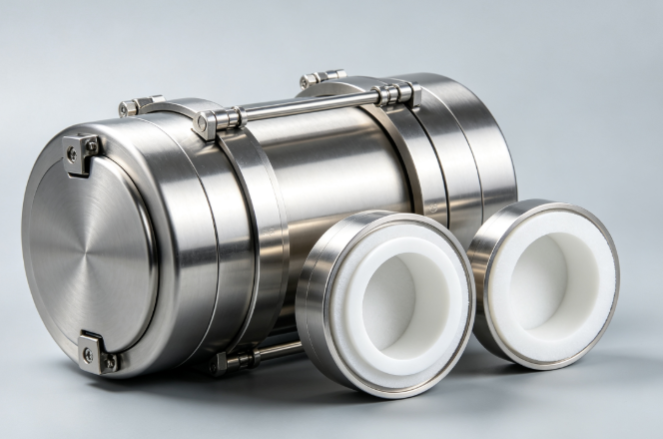
Most reactor units consist of stainless steel outer shell and corrosion-resistant inner liner. The dual-layer structure ensure safety and chemical stability.
It run stable under sealed heating conditions. It help researchers produce uniform nanomaterials and single crystal structures.
2. Common Reactor Liner Materials
2.1 PTFE Inner Liner
PTFE liner is the most common accessory for hydrothermal synthesis reactor. It have excellent acid and alkali corrosion resistance.
This liner material keep reaction solution pure. It no chemical contamination during experimental heating.
PTFE liners fit most conventional hydrothermal experiments. It support general temperature and pressure parameters.
2.2 PPL High-Temperature Liner
PPL liner is an upgraded liner type for hydrothermal synthesis reactor. It withstand higher working temperature than PTFE material.
It have better thermal stability under long-term heating. It suit high-temperature material synthesis projects.
PPL liners show less deformation in extreme reaction conditions. It extend reactor service cycles.
3. Core Parameter Performance Comparison
Different liner materials and reactor models have different working limits. The table below show verified lab standard test data for daily experiment reference.
Both hydrothermal synthesis reactor types share the same pressure limit of 3 MPa. Temperature tolerance is the biggest difference between the two liner options.
4. Key Structural Components
The outer shell use 316 stainless steel material. It provide strong pressure resistance and mechanical protection.
4.2 Sealing and Fastening Structure
Uniform fastening design balance pressure distribution. It avoid local stress concentration and vessel damage.
Detachable liner structure simplify cleaning work. Researchers replace liners fast to avoid cross contamination.
5. Main Laboratory Application Scenarios
Hydrothermal synthesis reactor produce nanoparticles and quantum dots. The stable high-pressure environment control material morphology.
5.2 Single Crystal Growth
Many lab-grown functional crystals rely on hydrothermal reaction technology.
The reactor digest rock and mineral samples. It help geological labs complete elemental analysis and component testing.
Do not fill the reactor over 80% volume. Overfilling cause excessive internal pressure during heating.
Cool the reactor fully before opening. High residual temperature and pressure lead to safety risks.
7. Frequently Asked Questions
A1: PTFE liner reactors safely work up to 180°C. PPL liner models support continuous work at 220°C, peak temperature reach 260°C.
A2: Most standard lab reactors have a fixed max working pressure of 3 MPa or 30 Bar for safe operation.
A3: PPL liner is the better choice. It has higher thermal stability and no deformation under long high-temperature heating.
A4: Yes. Both PTFE and PPL liners have strong acid corrosion resistance. They fit most acidic hydrothermal experiments.
A5: The solution filling volume cannot exceed 80% of liner capacity. It reserve space for high-pressure expansion.